Why BUG Rating Matters in Outdoor Lighting Design
Outdoor lighting is not only about brightness or visual impact. In professional lighting design, controlling where the light goes is just as important as how much light is produced. This is where BUG Rating becomes essential.
At Unilamp, we believe that understanding BUG Rating helps designers, architects, and project owners create outdoor lighting systems that are efficient, compliant, and environmentally responsible.
What Is BUG Rating?
BUG stands for Backlight, Uplight, and Glare. It is a lighting classification system developed by the Illuminating Engineering Society (IES) to evaluate how outdoor luminaires distribute light.
Instead of measuring only total lumen output, BUG Rating focuses on light distribution in specific zones. This allows designers to control light trespass, sky glow, and visual discomfort.
The BUG system replaces older “cutoff” classifications and provides more detailed and measurable criteria for outdoor lighting performance.
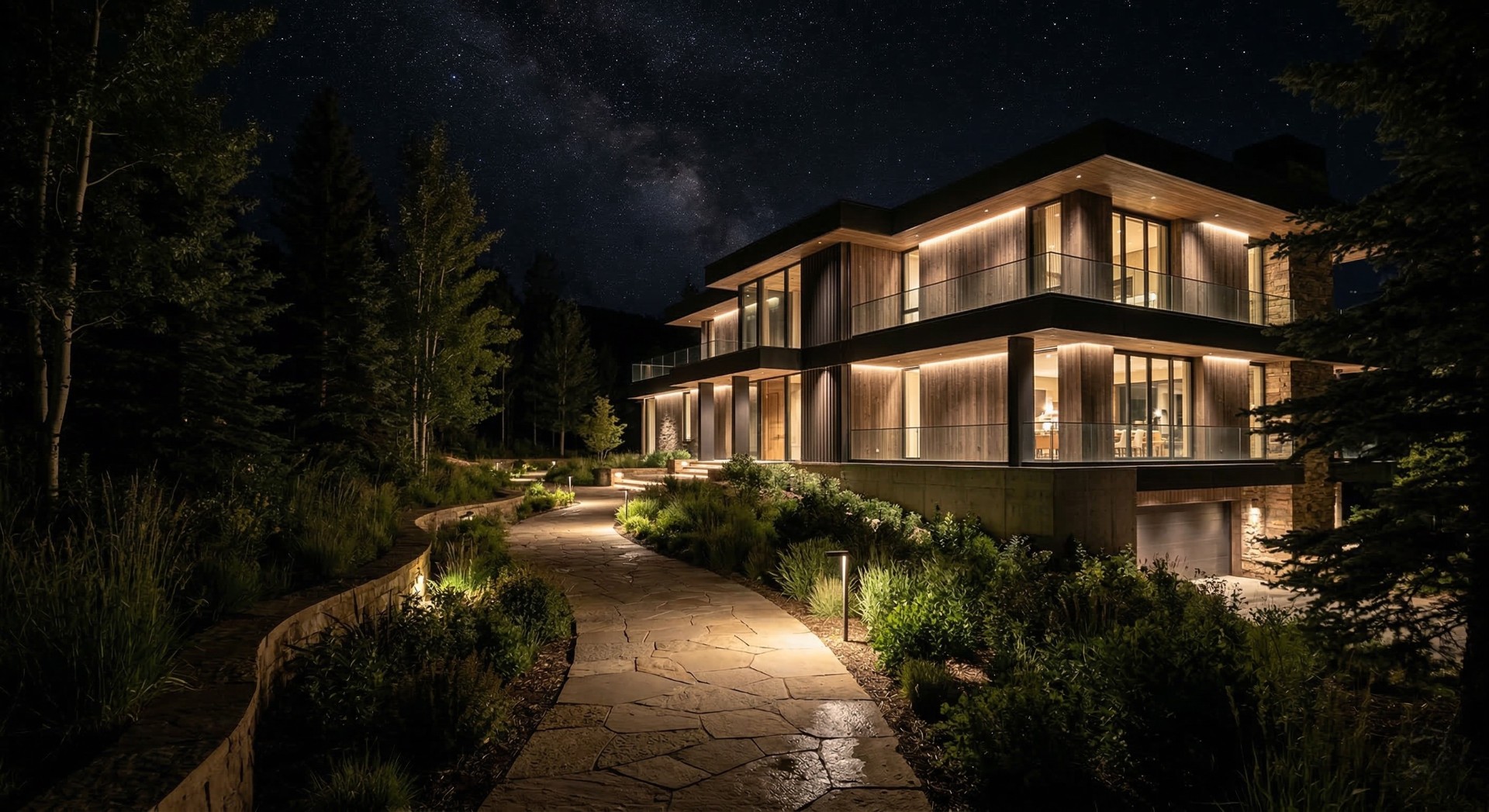
Understanding the Three Components of BUG
Backlight (B)
Backlight measures the amount of light projected behind the luminaire.
Excessive backlight can cause light trespass onto neighboring properties, residential areas, or unwanted spaces. In urban environments, poor backlight control may lead to complaints and regulatory issues.
A lower B rating means better control of light behind the fixture.
Uplight (U)
Uplight measures the amount of light emitted above the horizontal plane of the luminaire.
High uplight contributes to sky glow, which reduces night sky visibility and increases light pollution. Many municipalities now restrict uplight levels, especially in environmentally sensitive zones.
A U0 rating indicates zero uplight, which is often required in dark-sky compliant projects.
Glare (G)
Glare evaluates the intensity of light emitted at high angles that may cause visual discomfort.
Excessive glare reduces visibility, affects safety, and creates an unpleasant visual experience. In parking lots, roadways, and pedestrian areas, glare control is critical for both comfort and performance.
Lower G ratings indicate better glare control.
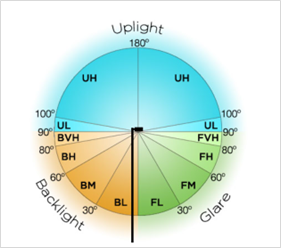
How to Read a BUG Rating
A BUG classification is written in a format such as:
B2-U0-G1
Each letter is followed by a number, typically ranging from 0 to 5.
- Lower numbers mean better light control.
- Higher numbers indicate more light emitted in that zone.
For example:
- B0 = Minimal backlight
- U0 = No uplight
- G0 or G1 = Very low glare
It is recommended to evaluate the complete BUG rating rather than focusing on a single component, in order to ensure balanced lighting performance and proper environmental control.
A Guide to Determining the Right Bug Rating for Your Project
Choosing the correct BUG Rating depends on location, application, environmental sensitivity, and local regulations.
Key Factors to Consider
- Project environment (rural, suburban, urban) Relate to the Dark sky compliance by Zone
- Local lighting ordinances
- Mounting height and pole arrangement
- Application type (roadway, façade, landscape, parking)
- Sustainability goals
Below is a general guideline for selecting appropriate BUG ratings.
Recommended BUG Rating by Application
|
Application Type |
Backlight (B) |
Uplight (U) |
Glare (G) |
Primary Objective |
|
DarkSky / Rural Area |
B0–B1 |
U0 |
G0–G1 |
Eliminate sky glow and protect environment |
|
Residential Zone |
B0–B2 |
U0–U1 |
G0–G1 |
Reduce light trespass and discomfort |
|
Urban Commercial |
B1–B3 |
U0–U2 |
G1–G2 |
Balance illumination and comfort |
|
Roadway Lighting |
B1–B3 |
U0–U1 |
G0–G1 |
Ensure visibility and safety |
|
Parking Area |
B1–B2 |
U0–U1 |
G1 |
Control spill light and glare |
|
Architectural Façade |
B1–B3 |
U1–U2* |
G1–G2 |
Controlled accent lighting |
*Uplight may be used intentionally in façade lighting but must comply with local regulations.
Why BUG Rating Matters in Outdoor Lighting Design
1. Compliance with Lighting Regulations
Many cities and countries adopt lighting codes based on IES standards. BUG Rating helps ensure compliance with local ordinances related to light pollution and environmental protection.
Specifying luminaires with appropriate BUG ratings reduces the risk of project delays or redesign.
2. Reduction of Light Pollution
Light pollution is a growing global concern. Poorly controlled outdoor lighting wastes energy and negatively impacts wildlife, ecosystems, and human health.
By selecting luminaires with low uplight and controlled backlight, designers can significantly reduce environmental impact while maintaining required illumination levels.
3. Improved Visual Comfort and Safety
Glare can reduce visibility and increase accident risk in roads, car parks, and public spaces.
Using luminaires with appropriate G ratings enhances visual clarity and creates a more comfortable environment for pedestrians and drivers.
Well-designed outdoor lighting should illuminate surfaces, not shine directly into people’s eyes.
4. Better Energy Efficiency
When light is directed only where needed, less wattage is required to achieve the desired illumination.
Controlling backlight and uplight minimizes wasted lumens, which improves overall system efficiency and supports sustainable building certifications such as LEED.
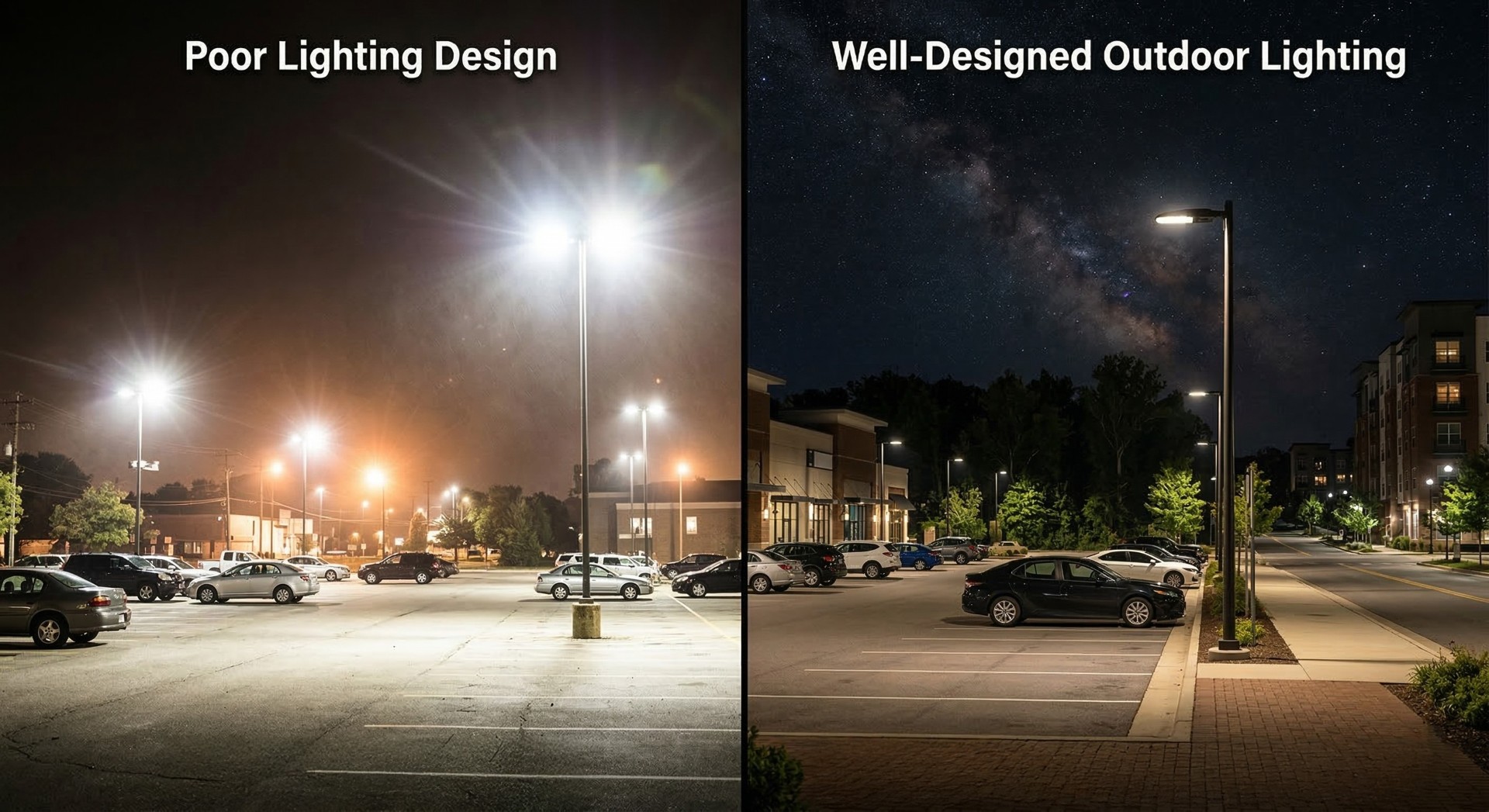
BUG Rating as a Standard for Responsible Lighting
In modern outdoor lighting design, performance alone is not enough. Designers must consider environmental impact, regulatory compliance, and long-term sustainability.
BUG Rating provides a clear and measurable framework to achieve these goals.
At Unilamp, our outdoor luminaires are engineered with precise optical systems to meet various BUG classification requirements, including DarkSky.
Through our Knowledge Hub, we continue to share technical insights that support smarter, safer, and more responsible lighting design.
Understanding BUG Rating is not only about technical specification. It is about delivering outdoor lighting that respects people, property, and the environment.
For more information, visit www.unilamp.co.th or contact online@unilamp.co.th